
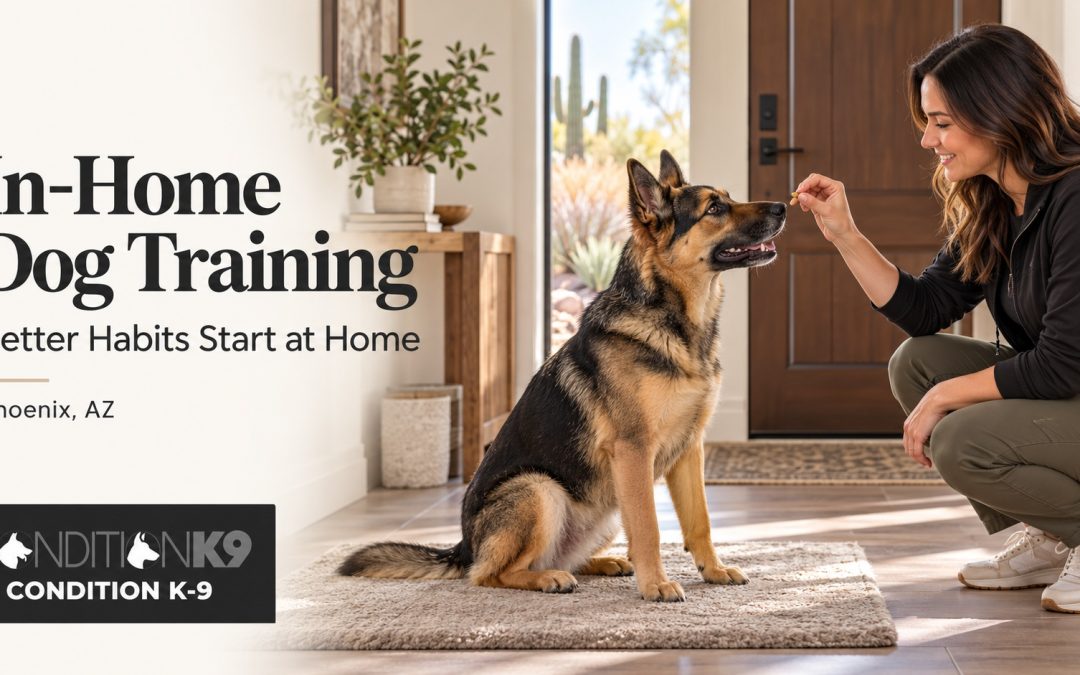
Some dog behaviors are easier to understand where they happen. Jumping on visitors, rushing through the front door, barking at windows, and stealing food often involve familiar surroundings and well-practiced routines. Training in that environment allows you to work on the situations that affect your household, rather than wondering how a lesson will translate once you return home.
Condition K-9 offers in-home dog training in the greater Phoenix area, helping owners address everyday challenges and develop clearer communication with their dogs. The goal is to build useful skills that fit daily life, from calmer greetings to more consistent household boundaries.
Why the Home Environment Matters
Your dog’s behavior can change depending on the setting. A dog that responds well in a quiet training space may struggle when the doorbell rings or dinner reaches the table. At home, familiar sounds, people, and routines can compete for attention. Evaluating those circumstances helps identify what happens before a behavior and what may be encouraging it to continue.
For example, jumping may repeatedly earn attention, while counter surfing occasionally rewards a dog with food. Simply repeating “no” does not explain what to do instead. An in-home approach creates opportunities to teach an alternative behavior, adjust the environment, and help family members respond consistently.
Calmer Greetings and Safer Doorway Habits
Welcoming guests can be challenging when your dog becomes excited before anyone steps inside. Practicing a predictable greeting routine can help replace jumping with an achievable task, such as keeping four paws on the floor or settling in a designated area. Training should begin with manageable distractions before progressing to more exciting arrivals.
Door rushing deserves particular attention because an open entrance can quickly become an escape opportunity. Teaching your dog to pause at a doorway and wait for a cue can support safer routines. During the learning process, practical measures such as a secured gate or appropriately handled leash help prevent your dog from rehearsing the behavior.
Addressing Barking, Food Stealing, and Boundaries
Window barking can become a recurring part of the day when passing people or dogs repeatedly draw your dog’s attention. A training plan may involve limiting access to that view, rewarding disengagement, and teaching your dog to settle elsewhere. The appropriate approach depends on whether the barking reflects excitement, frustration, fear, or another underlying concern.
Food stealing also requires both training and prevention. Keeping counters clear reduces opportunities for unwanted behavior to pay off, while teaching a reliable “leave it” or a designated resting place offers a more useful response during meal preparation. Household boundaries follow the same principle: dogs need clear, consistent information about where to go and what behavior earns a reward.
Helping the Whole Household Participate
Lasting improvement depends on what happens between lessons. If one person rewards jumping while another discourages it, the dog receives conflicting information. In-home training gives owners an opportunity to discuss expectations and practice responses that everyone can realistically maintain.
Short, focused practice sessions can become part of ordinary routines. Waiting before a door opens, settling while someone prepares food, and responding to a cue away from a window all provide learning opportunities. Progress varies with the dog, the behavior’s history, and the consistency of practice; meaningful change usually requires repetition rather than a single lesson.
Preparing for In-Home Dog Training
Before arranging training, identify the situations you most want to improve. Note when they occur, who is present, and how your dog responds. Share any history of biting, guarding, or intense fear before the appointment so the trainer can discuss appropriate precautions. Avoid deliberately provoking a concerning behavior for demonstration.
Condition K-9 can discuss your goals and whether in-home training is an appropriate starting point. A clear picture of your household’s needs helps make the conversation more productive.
Frequently Asked Questions
Can an adult dog benefit from in-home training?
Yes. Adult dogs can learn new skills and routines, although established habits may require consistent practice and management.
Will my dog behave better after one session?
A session can provide direction, but reliable changes generally develop through continued practice. Results depend on the individual dog and the challenges involved.
Should family members participate?
When practical, involving the people who regularly care for the dog helps create consistent cues, expectations, and responses.
Build Better Habits at Home
Explore Condition K-9’s dog training services in Phoenix to learn about available training options. Contact Condition K-9 to discuss in-home dog training and the household behaviors you would like to address.
Disclaimer: This article is intended for general informational and entertainment purposes only and should not be considered professional advice. Always consult a qualified professional regarding your specific needs or circumstances.