
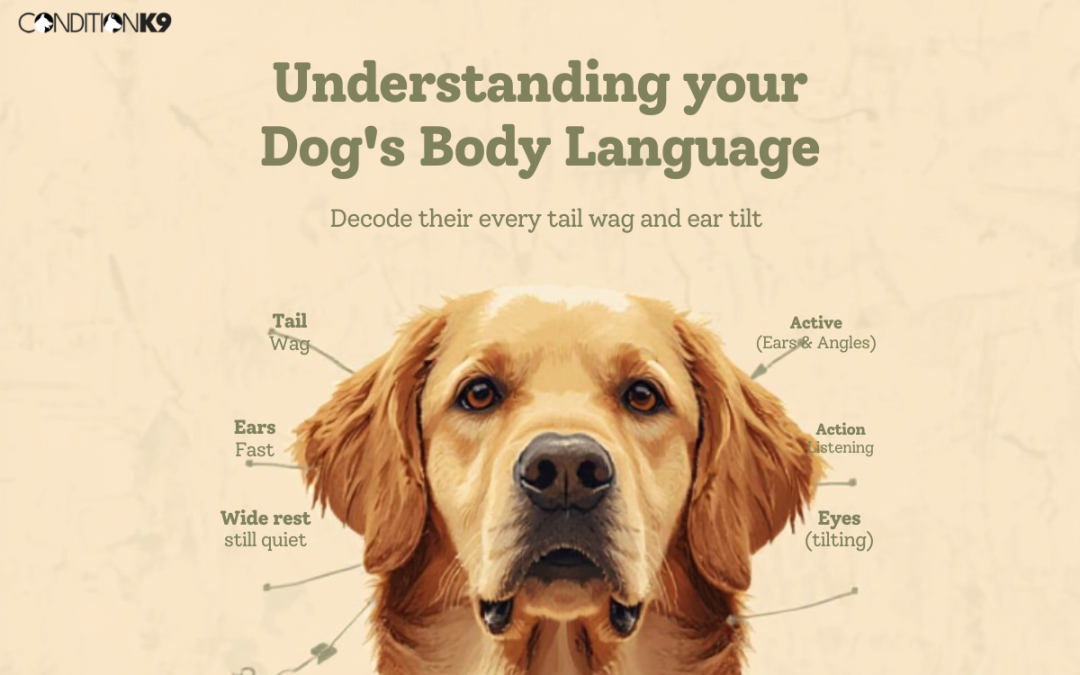
Dogs may not use words, but they communicate constantly. Every movement—whether it’s a tail twitch, a head turn, or a shift in posture—reveals how they’re feeling in the moment. When you learn to understand these subtle messages, you become a better leader, a better trainer, and a more trusted companion.
Here’s a clearer look into the silent (and not-so-silent) language of dogs.
- Eye Expressions: Calm, Curious, or Concerned
A dog’s eyes often reveal emotions before anything else.
Relaxed, Soft Eyes
When the eyelids look loose and the gaze is gentle, your dog is comfortable and at ease.
Wide Eyes or Visible Whites
Often called “whale eye,” this indicates tension, fear, or worry. The dog may feel threatened or overwhelmed.
Intense Staring
A hard, fixed stare between dogs can be confrontational. If directed at a person, it’s a sign the dog is uncomfortable or trying to create space.
- Tail Signals: The Truth Behind the Wag
Not all wags carry the same meaning. Tail position and movement tell a deeper story.
- Low, loose wag → relaxed and friendly
- High, tight wag → overstimulated or on alert
- Tucked tail → scared, stressed, or unsure
- Neutral, small movements → calm and observant
Reading a wag without reading the dog’s full body often leads to misinterpretation—context is key.
- Ear Movements: Quick Messages in Real Time
Ears shift constantly to reflect what a dog is feeling.
- Forward and alert → focused or curious
- Relaxed and sideways → content
- Pinned back → nervous, overwhelmed, or appeasing
- Back with wiggly body → excited affection
With floppy-eared breeds, pay more attention to the base of the ears.
- Body Posture: Confidence, Fear, or Play?
A dog’s overall stance provides some of the most important clues.
Loose and Wiggly
A relaxed spine and bouncy movements show friendliness and willingness to engage.
Stiff and Upright
Rigid posture, a tense tail, and locked muscles suggest unease, guarding, or potential reactivity.
Backing Away or Crouching
The dog is afraid, unsure, or trying to avoid confrontation.
Play Bow
Front legs stretched out, rear end up—this is an invitation to play and usually paired with joyful energy.
- Mouth & Facial Tension: Small Signals, Big Meaning
Dogs communicate a lot through the muscles around their mouth.
- Mouth slightly open, relaxed tongue → comfortable
- Panting (without heat or exercise) → stress
- Lip licking or yawning in odd moments → calming signals
- Showing teeth or lifting the lip → warning
- Submissive grin → an appeasement gesture, often friendly
Always consider the whole body before assuming intent.
- Vocal Cues: More Than Barks and Growls
Sound adds another layer to canine communication.
- High-pitched barking → excitement or enthusiasm
- Deep barking → alerting or protecting
- Growling → discomfort; a request for space
- Whining → frustration, excitement, or anxiety
- Howling → communication or seeking connection
Growls in particular shouldn’t be punished—they’re a dog’s early way of saying “I’m uncomfortable.”
- Context Brings the Full Story Together
Dog body language is never a single signal—it’s a collection of cues.
For example:
- A wagging tail + stiff posture = not friendly
- Yawning + looking away + lip lick = trying to avoid conflict
- Soft body + slow blink = affection and trust
Reading all signals together helps prevent misunderstandings and keeps interactions safe.
Why It Matters
Understanding canine body language helps you:
✔ Build deeper trust with your dog
✔ Avoid escalating fear or aggression
✔ Improve communication during training
✔ Reduce your dog’s stress in new situations
✔ Help your dog feel more understood and secure
When you learn your dog’s “native language,” everything—from training to daily life—becomes smoother and more harmonious.
Courtesy of Certified Dog Trainers and On Leash Dog Training. Click here for more on Condition K-9. Follow us on Facebook & Twitter.
This content is not to be considered as expert advice but rather as a general reading pleasure. For proper dog training, consult with an expert Phoenix dog trainer.